Pool type
Structural engineering for infinity-edge pools, including edge detailing and structural support.
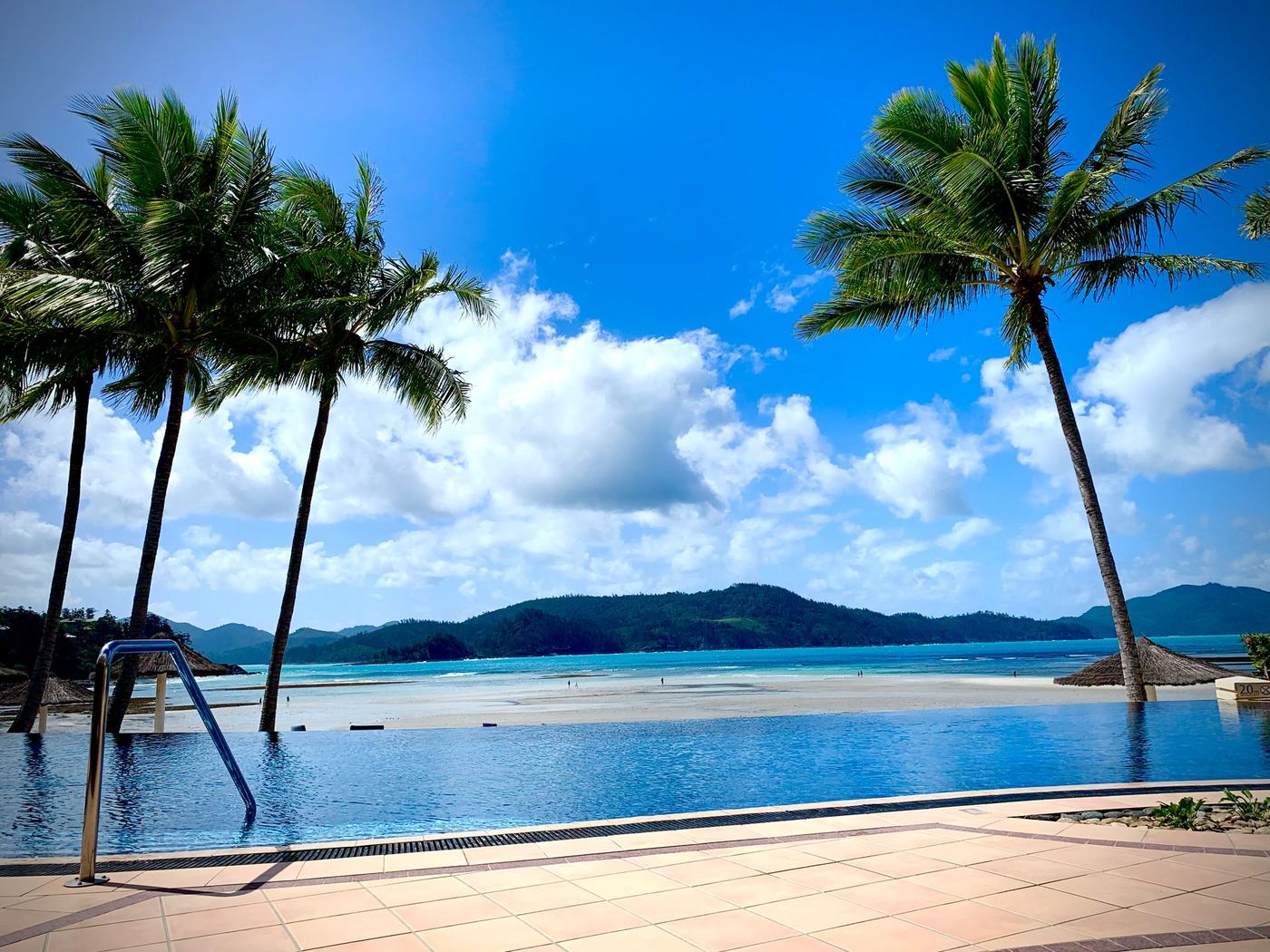
In shortThe infinity edge is the structural problem: the weir wall holds water on one side with no balancing soil on the other, so it acts as a free-standing retaining wall — and it usually sits on the steepest part of the site.
In a conventional pool, every wall has water on one side and soil on the other, and the two partly balance. An infinity edge removes that balance. The weir wall retains the full depth of water with nothing behind it, so it behaves as a free-standing cantilever and needs to be designed as one — usually with heavier reinforcement and a footing sized for overturning, not just bearing.
An infinity edge is not just a wall. Below and behind it sit the catch basin and balance tank, which are themselves water-retaining structures that have to be designed, waterproofed and supported. Where these sit on fill or a slope, their foundations need as much attention as the pool shell.
Infinity edges exist to face a view, which means they are almost always on falling ground. That brings global stability into scope: not only whether the pool structure is adequate, but whether the ground it sits on remains stable with a pool, its water, and often a retaining structure added to the slope. Our guide on building a pool on a sloping site covers what changes.
On a normal pool, a few millimetres of differential settlement is invisible. On an infinity edge it is not — the water sheeting over the edge makes any deviation in level obvious across the full length of the weir. The foundation design has to control differential movement, which often means founding the edge structure on consistent material rather than partly on cut and partly on fill.
Structural design and reinforcement detailing for the shell and weir wall, the supporting structure and balance tank, footing design for the edge, retaining design where the site requires it, plus calculations and documentation for approval.
FAQs
Because there is more structure to design: a free-standing weir wall, a catch basin and balance tank, and usually retaining and foundation work on a sloping site. It is several structures interacting, rather than one shell.
Sometimes, but it is a structural alteration rather than a finish change — removing a wall's soil support changes how it works. The existing shell has to be assessed first through an inspection and assessment.
Water will sheet unevenly and the fault is visible from the moment the pool is filled. Level tolerance at the edge is tight, so the structure is designed to limit differential settlement rather than relying on finishes to correct it.
Send your plans or site details and get a structured, itemised quote.