Pool type
Structural engineering for freeform and lagoon-style pools with curved, irregular shells.
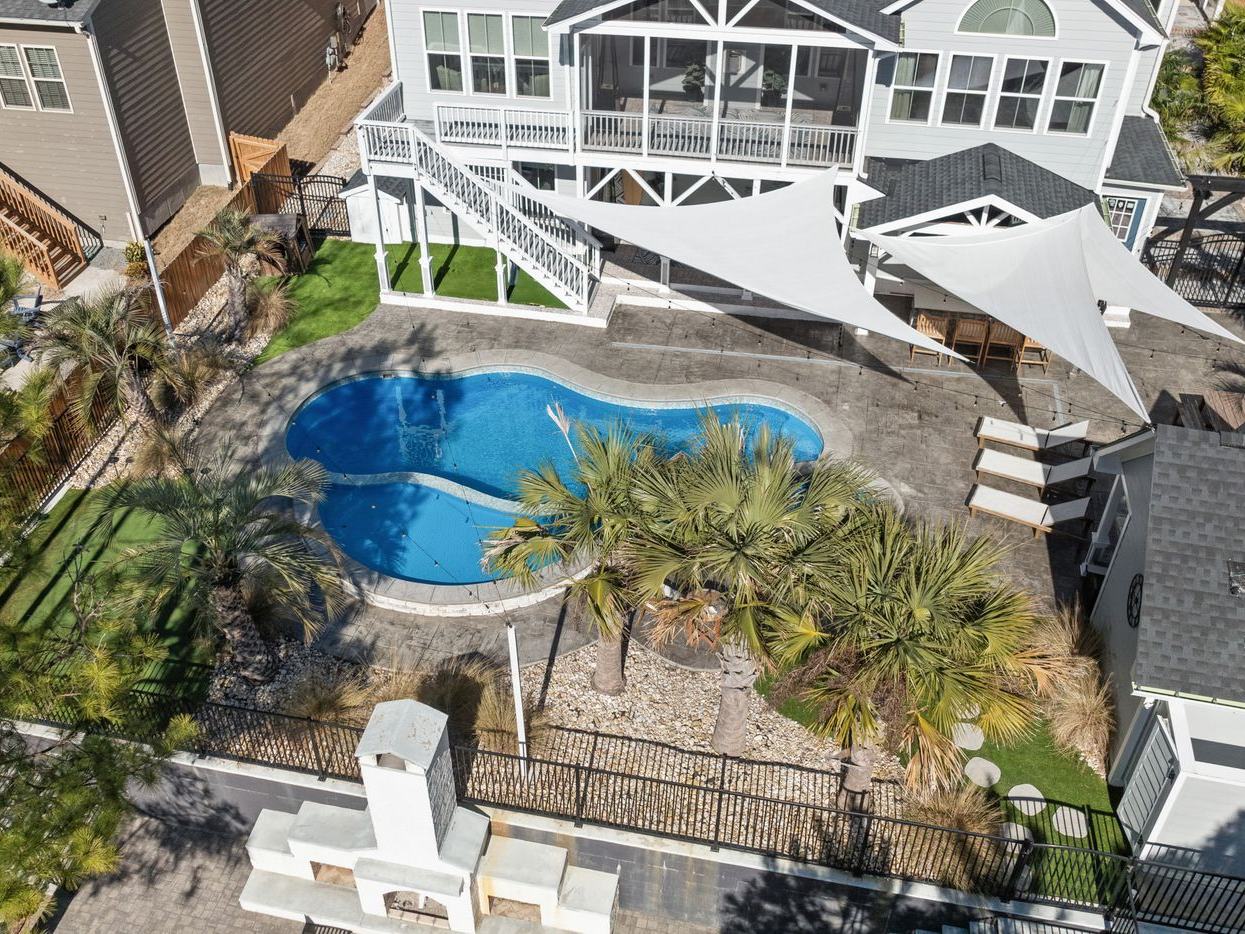
In shortCurved shells behave differently from rectangular ones — curvature can help the wall resist load, but it complicates reinforcement detailing and site set-out, and the design has to follow the pool's actual geometry rather than a standard rectangular detail.
A straight pool wall resists water and soil pressure mainly by bending. A curved wall can carry some of that load in compression around the curve instead, the way an arch does. Where the curve works in the structure's favour, it is genuinely more efficient. Where it curves the other way — a wall bowing outward against the soil — the effect reverses and the wall is worse off than a straight one.
A freeform pool typically has both conditions around its perimeter, which is why the reinforcement is not uniform the whole way around.
Reinforcement in a curved shell has to follow the curve. That means bar bending schedules matched to the actual radii, lap positions that fall where they can be built, and attention to tight radii where bars converge and congestion makes the steel difficult to place properly. Reinforcement that cannot physically be placed as drawn does not perform as designed — so buildability is part of the design, not a site problem.
A rectangle is easy to set out accurately on site. An irregular curve is not. If the built shape drifts from the designed shape, the radii change and so do the forces the wall was designed for. Clear set-out information on the drawings is part of what keeps the built structure consistent with the design.
Curved and lobed shapes produce an excavation perimeter that varies in its distance from boundaries, structures and trees. Each pinch point is assessed on its own rather than by an overall setback figure.
Structural design and reinforcement detailing developed for the specific shell geometry, footing design, excavation assessment around the perimeter, plus calculations and documentation prepared for approval.
FAQs
No — they are different, not weaker. Curvature helps in some places and hurts in others, so reinforcement varies around the shell rather than being uniform. Designed for the actual geometry, a freeform shell performs as well as a rectangular one.
Usually somewhat, because the detailing is specific to the shape rather than repeated. The reinforcement layout, bar schedules and set-out all have to be worked out for that pool.
Tell us before construction. Changing radii changes the forces in the wall, so a shape change is a design change — not something to resolve on site during the pour.
Send your plans or site details and get a structured, itemised quote.